Skip to product information
1 of 5

LTX-OH Pisolitic Iron Laterite Substrate | Biotech Aquatica

LTX-OH Pisolitic Iron Laterite Substrate | Biotech Aquatica

Pisolitic iron laterite

LTXOH

True pisolitic iron laterite for planted aquaria, aquaponics grow beds and premium potting and bonsai mixes. Iron-rich by geology — not by additive.

3graded cuts
250mL–10Lpack sizes
Basaltiron-rich parent rock
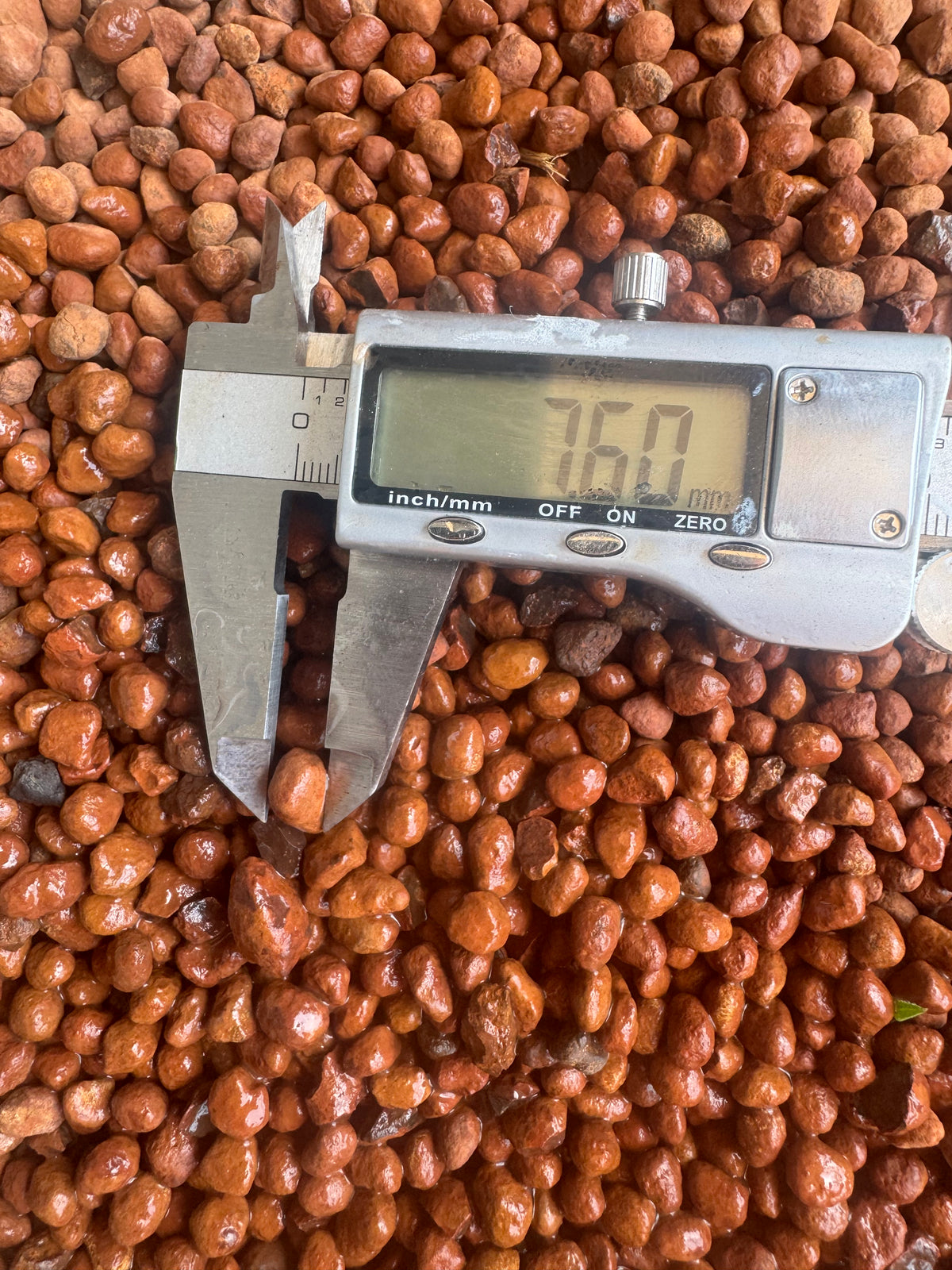
LTX pisolitic iron laterite — rounded dark red-brown iron-cemented pisoliths
True iron lateritePlanted aquaria · Aquaponics · Bonsai & pottingSeven volume packs
Iron is the rock, not a coating Hard ferricrete pisoliths Slow-release root iron Won't cloud or compact Australian basalt laterite
LTX is true pisolitic iron laterite — rounded iron-cemented grains weathered from iron-rich basalt over millions of years. Most products sold as "laterite" are soft bauxite grit: alumina grains with a bit of incidental iron. LTX is different rock entirely. The iron is the structure itself, which is why the grains stay hard, stay porous, and keep feeding roots season after season.
A word on laterites

Laterites ain't laterites.

The word "laterite" gets stretched over half the mineral grits on the market. It comes from the Latin later — brick — a nod to the way the iron-rich versions bake hard in the sun. But not every "laterite" is the same rock, from the same parent, shaped by the same weathering. If you're feeding roots, the differences matter.

Pisolitic iron laterite pisoliths — rounded iron-cemented grains in close detail

It starts with the host rock

Everything a laterite can become was already sitting in the parent rock before weathering began. LTX forms on iron-rich basalt — ancient lava flows that carried roughly a tenth of their weight in iron from the day they cooled. Millions of years of deep subtropical weathering leached away the silica and light minerals and left the iron behind, residually concentrated it. Most of the "laterite" sold into aquatics and gardens starts from the opposite place: pre-leached quartz sandstones and sediments that were poor in iron from the beginning. Tens of millions of years of tropical rain stripped what little iron they had and concentrated alumina instead. That's not laterite in the brick sense — that's bauxite grit wearing laterite's name.

Age matters, but only through what it does

The tropical bauxite landscapes of the far north have weathered relentlessly for something like 50 million years. The result is soft, earthy pisoliths of aluminium hydroxide with a dusting of iron. The basalt profiles behind LTX are younger, deeper weathering systems — intense enough to build proper rounded pisoliths and cement them with residually concentrated iron, not so extreme that the iron itself has been stripped away. The iron-cemented kind is what the word laterite was coined for: the brick-making rock.

Roughly, what's in the rock?

General deposit-scale figures, dry basis — the rock class, not a certified batch analysis.

Pisolitic iron laterite (LTX)

Iron oxide — Fe2O3~25–40%
Aluminium oxide — Al2O3~50%

Silica in single digits. A few percent titanium. Negligible organics.

Bauxite-type "laterite"

Iron oxide — Fe2O3~5–20%
Aluminium oxide — Al2O3~75%

Alumina dominates. Iron is what survived by accident.

That works out at roughly three to ten times more iron per unit of alumina in the basalt-hosted rock. No processing trick achieves that — it's the parent rock, and it was decided millions of years ago.

The form the iron takes is the real story

In pisolitic iron laterite, the iron is the structure. Goethite (FeO(OH)) and hematite (Fe2O3) form the hard ferricrete cement binding every pisolith together — iron minerals right through the mass of each grain. In bauxite grit, iron is an accessory: thin hematite staining on the surface of aluminium hydroxide (Al(OH)3) grains.

For plants and aquariums, that difference is everything:

  • Locked in the water column. Iron oxides don't dissolve in oxygenated water — no leaching, no iron spikes, no feeding nuisance algae.
  • Released at the root. Substrate microzones turn ferric iron (Fe3+) into plant-available ferrous iron (Fe2+), on demand, right at the root surface.
  • Grains that stay whole. Iron-cemented pisoliths are ferricrete-hard. They hold shape and porosity for good, while soft earthy pisoliths break down into mud and silt.
  • Less alumina per feed. Lower aluminium relative to iron, and what aluminium is present stays locked up as gibbsite across the normal planted-tank and aquaponics pH range.

So when someone calls their product "laterite", the useful questions are: weathered from what rock? Iron as the cement, or iron as a stain? Grains that last, or grains that turn to mud? Laterites ain't laterites. Ours is the brick kind.

The LTX difference

Iron laterite. Not bauxite grit.

True pisolitic iron laterite

  • Weathered from iron-rich basalt parent rock — iron-dominant from the start
  • Iron minerals form the hard cement holding every grain together
  • Heavy, dense, ferricrete-hard pisoliths that stay whole indefinitely
  • Low alumina relative to iron — the aluminium present stays locked up across the planted-tank pH range
  • Virtually free of organic matter — inert and clean

Typical "laterite" (soft bauxite grit)

  • Weathered from pre-leached sedimentary rock — alumina-dominant, iron stripped away
  • Iron is an accessory coating on alumina grains, not the binding mineral
  • Soft, earthy pisoliths that break down into mud and dust
  • High alumina per unit of iron delivered
  • Clay and organics fines that cloud water
Why it performs

Built by geology to feed roots.

Iron through every grain

Iron minerals are the cement that binds each pisolith through its whole mass. Every particle is a mineral reservoir — not a low-iron grain with a surface dusting that washes off.

Slow-release root iron

Locked fast in oxygenated water — no leaching, no algae-feeding spikes — then released to plant roots where substrate microzones turn it available on demand.

Hard grains, open structure

Ferricrete-hard pisoliths resist compaction for good. The bed stays porous and circulating, keeping the root-zone layering planted systems depend on.

Clear water on setup

Washed and screened clean of clay fines. Negligible organic matter means no bacterial bloom, no nutrient loading, no smell.

Stays put in flood & drain

Dense grains hold position through aquaponics cycling and siphoning. No floating, no bed disturbance, no sorting to the surface.

Permanent component

It will outlast every organic part of a mix. Perlite crushes, scoria floats, bark rots — LTX keeps doing its job for the life of the system.

Grades & packs

Three cuts. Seven packs.

Length (cm) × Width (cm) × Target depth (cm) ÷ 1000 = Litres required
LTXOH graded cuts — SKU, pack size and best-fit applications
SKU Size cut Pack Best for
LTXOH-3-250 3mm minus 250mL Nano tanks, bonsai soil blending
LTXOH-3-500 3mm minus 500mL Small tanks, under-sand layer
LTXOH-3-1000 3mm minus 1L Mid-size tanks, potting additive
LTXOH-6-1000 3–6mm 1L Planted tanks, bonsai mixes
LTXOH-6-5000 3–6mm 5L Large planted tanks, small grow beds
LTXOH-10-5000 6–10mm 5L Aquaponics beds, drainage layers
LTXOH-10-10000 6–10mm 10L Bulk grow beds, trade packs
Choosing your grade

Match the cut to the job.

LTX laterite 3mm minus fine grade close-up

3mm minus — LTXOH-3

Bonsai & potting: blended into heavier soils and free-draining mixes. Also works under cosmetic sand or mixed through planted-tank substrate to densify the root zone.

LTX laterite 3-6mm medium grade close-up

3–6mm — LTXOH-6

Planted aquariums: the working root layer and all-round substrate grade. Also the mineral grit fraction of bonsai mixes where finer root contact matters.

LTX laterite 6-10mm large grade close-up

6–10mm — LTXOH-10

Aquaponics beds: deep flood-and-drain beds and drainage layers. Maximum open structure and flow for grow beds and large structural mixes.

Pairs well with

Build the whole root zone.

SUB-6

BTA substrate media for the living substrate bed — a structural and biological complement to the LTX mineral layer.

PMX-8 Probiotic Protection

Microbial biosecurity for aquatic systems — supports a balanced microbial community around the root zone and grow bed.

What's included

Graded, washed, ready to use.

Screened & graded

Dry-screened into tight size fractions on a prospecting-grade screen so every pack is a clean, predictable cut.

Washed clean

Clay and dust fines removed before packing — clear water from the first fill, not after a week of rinsing.

Natural pisoliths

Whole rounded grains as nature cemented them. Nothing crushed, nothing coated, nothing added.

Getting more from it

Layer it. Don't just scatter it.

The layered bed

Run LTXOH-10 at the base for drainage and flow, LTXOH-6 as the working root layer, and LTXOH-3 at the top under cosmetic sand. The graded stack keeps the bed open at depth and dense with roots at the surface.

For aquaponics

Give the bed depth — a shallow sprinkle feeds only the top few centimetres. A deep LTX bed gives roots continuous mineral contact and keeps iron deficiency off the table in fish-waste-only systems.

Questions

FAQ

Is this the same as the "laterite" sold for aquariums?

No. Most aquarium "laterite" is soft bauxite grit — alumina grains with some incidental iron. LTX is true pisolitic iron laterite weathered from iron-rich basalt, where iron minerals are the cement binding each grain. Different parent rock, different mineralogy, harder grains.

Will it alter my water chemistry?

It is an insoluble mineral substrate. The iron stays locked in oxygenated water and is released at the root surface rather than into the water column, and it is essentially free of organic matter. Intended for use across the normal planted-tank and aquaponics pH range.

Will it break down into mud over time?

No. The pisoliths are iron-cemented and ferricrete-hard. They hold their shape and porosity indefinitely, unlike soft earthy pisoliths that disintegrate into fines.

Do I need to rinse it before use?

It is washed and screened before packing, so a light rinse is all that is needed. If you want absolute clarity in a display tank, a quick rinse until it runs clear is good practice.

Which grade and pack size should I choose?

Use the formula above the grade table: length × width × target depth ÷ 1000 = litres required. LTXOH-6 in 1L or 5L is the all-rounder for planted tanks. LTXOH-3 in 250mL to 1L for under-sand layers and soil blending. LTXOH-10 in 5L or 10L for aquaponics beds and structural drainage.

Can I use it for bonsai and potting?

Yes. Use it as the mineral grit fraction of a free-draining mix — it adds permanent structure and root-zone mineral nutrition where iron chlorosis is a common failure in low-organic mixes.

What does the OH in the name mean?

It refers to goethite (FeO(OH)) — the iron oxyhydroxide mineral that forms the hard cement binding each pisolith. It is the iron mineral responsible for slow-release root nutrition. The full name format is LTXOH-size-volume: mineral, grade, pack.

Not sure which cut you need?

Tell us about your tank, bed or mix and we'll point you to the right grade and pack size.

Talk to us

Wholesale & Trade

Bulk graded laterite for retailers, aquaponics builders, landscape suppliers and nursery trade. Volume pricing, repeat orders and mixed-grade pallets available.

Open a trade accountRequest bulk pricing

Biotech Aquatica — Australian mineral substrates for aquatic and horticultural systems.

View full details
Your cart
Variant Variant total Quantity Price Variant total
LTXOH-3-250 - 3mm minus LTX laterite powder 250mlLTXOH-3-250
$18.95/ea
$0.00
$18.95/ea $0.00
LTXOH-3-500 - 3mm minus LTX laterite powder 500mlLTXOH-3-500
$26.50/ea
$0.00
$26.50/ea $0.00
LTXOH-3-1000 - 3mm minus LTX laterite powder 1000mlLTXOH-3-1000
$38.28/ea
$0.00
$38.28/ea $0.00
LTXOH-6-1000 - 3-6mm LTX laterite substrate 1000mlLTXOH-6-1000
$25.95/ea
$0.00
$25.95/ea $0.00
LTXOH-6-5000 - 3-6mm LTX laterite substrate 5000mlLTXOH-6-5000
$75.90/ea
$0.00
$75.90/ea $0.00
LTXOH-10-5000 - 6-10mm LTX laterite substrate 5000mlLTXOH-10-5000
$61.95/ea
$0.00
$61.95/ea $0.00
LTXOH-10-10000 - 6-10mm LTX laterite substrate 10000mlLTXOH-10-10000
$132.90/ea
$0.00
$132.90/ea $0.00

View cart
0

Total items

$0.00

Product subtotal

Taxes included. Discounts and shipping calculated at checkout.
View cart