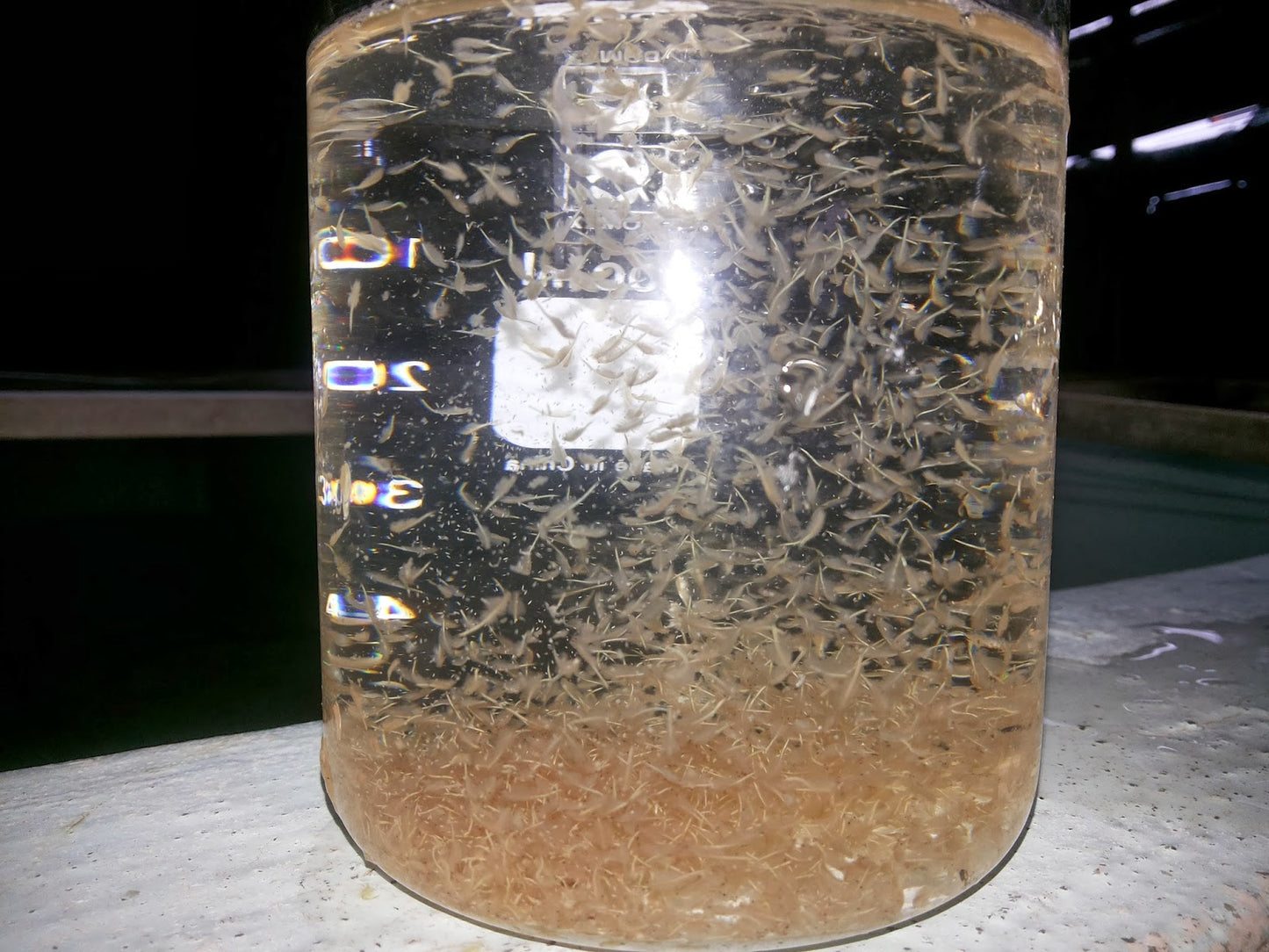
San Francisco Bay (SFB)
Small 400–500 µm nauplii with a generally higher natural HUFA profile. The choice for delicate newly hatched fry and the earliest larval stages.


Elevate your aquatic feeding strategy with Biotech Aquatica's premium selection of Artemia cysts. Two distinct, high-quality strains — San Francisco Bay (SFB) and Tibetan Red — each providing unique advantages to meet the diverse nutritional needs of fish and invertebrate larvae, juveniles and adult aquatic species.
For aquatic animal feed use only · Not for human consumption
Choose your strain
Hatch live brine shrimp on demand for larvae, juveniles and adult aquatic species.
Small 400–500 µm nauplii with a generally higher natural HUFA profile. The choice for delicate newly hatched fry and the earliest larval stages.
Giant 500–600 µm nauplii — around four to five times larger than standard Artemia — hatched at lower temperatures from the Namtso salt lake in Tibet.
Cysts engineered for magnetic separation: harvest the full nauplii yield with no decapsulation chemicals, less labour and no empty shells entering the larval tank.
Hatching at approximately 400–500 microns, perfectly suited to the tiny mouths of delicate newly hatched fry and early larval stages — minimising feeding stress and maximising ingestion.
Prized by serious aquarists for a generally higher highly unsaturated fatty acid (HUFA) value, providing a nutritional boost for developing larvae right from the start.
Renowned for reliable high hatch rates with excellent separation of nauplii from unhatched cysts and shells, giving a clean, contaminant-free feed.
Represents only a tiny portion of worldwide Artemia cyst harvests — a rare and valuable commodity sought after by discerning aquarists.
Hatching at approximately 500–600 microns, these nauplii are around four to five times larger than standard Artemia — a favourite for larger fish and invertebrates.
Strong hatch rates at 21–25 °C mean you often do not need to run a heater in your hatching kit year-round — convenient and energy saving.
Sourced from the vast Namtso salt lake in Tibet and known for hardiness and adaptability once hatched.
Despite their larger size and lower temperature requirement, these cysts deliver consistent and abundant live food.
| Strain | Nauplii size | Ideal hatching temperature | Hatching time | Salinity | pH | Cyst density | Best suited to |
|---|---|---|---|---|---|---|---|
| San Francisco Bay (SFB) | 400–500 microns | 25 °C (77 °F) | 36–48 hours | 20 ppt | 7.5–8.5 | 1–2 g per litre | Newly hatched fry, early larval stages and small-mouthed species |
| Tibetan Red | 500–600 microns | 21–25 °C (70–77 °F) | 28–36 hours | 20 ppt | 7.5–8.5 | 1–2 g per litre | Larger fish and invertebrates, and hatching kits running without a heater |
Traditional cysts separate well with a clean siphon and light. SEP-ART cysts are built for the magnetic workflow.
Newly hatched Artemia are a good source of protein, but their HUFA content — DHA and EPA in particular — can be limited. Biotech Aquatica's own enrichment raises the nutritional value of freshly hatched nauplii before they go into the larval or grow-out tank.
View Enrich-uMGrow newly hatched nauplii into larger juveniles and adults for a continuous, self-sustaining live food source and more substantial meals for your aquatic inhabitants.
Ongrowing Artemia: A Simple GuideSelected strain in the pack size you order — SFB 100 g packs, Tibetan Red, or INVE SEP-ART magnetic cysts.
Prepare saltwater at 20 ppt with dechlorinated or RO water and quality synthetic sea salt. Hold pH 7.5–8.5, dose 1–2 g cysts per litre, aerate vigorously and light continuously. SFB hatches at 25 °C in 36–48 hours; Tibetan Red at 21–25 °C in 28–36 hours.
Store sealed in a cool, dry place. Keep dry and protect from heat and moisture. For aquatic animal feed use only — not for human consumption.
For even more value from your Artemia, follow the IBHP approach of sterilise, neutralise and colonise across the hatchery workflow.
Read the IBHP guideSteady temperature, vigorous aeration, strong light and clean separation do more for hatch rate than adding extra cysts. Log your conditions each hatch and adjust one variable at a time.
San Francisco Bay (SFB). Its nauplii hatch at approximately 400–500 microns, small enough for the tiny mouths of delicate newly hatched fry and the earliest larval stages.
Tibetan Red. It hatches at approximately 500–600 microns — around four to five times larger than standard Artemia — which suits larger fish and invertebrates.
Often not. Tibetan Red achieves strong hatch rates at 21–25 °C (70–77 °F), so many hatch kits run year-round without a heater.
Salinity of 20 ppt using dechlorinated or RO water and quality synthetic sea salt, pH 7.5–8.5, 1–2 g of cysts per litre, vigorous aeration to keep cysts suspended, and continuous strong illumination above the hatching vessel.
For standard cysts, allow the shells and unhatched cysts to separate and siphon the nauplii out. For INVE SEP-ART cysts, use a magnetic separation tool such as the INVE HandyMag or another SEP-ART harvesting product.
Newly hatched nauplii are a good source of protein, but their HUFA content can be limited. Biotech Aquatica recommends enriching with Enrich-uM where additional HUFA nutrition is required.
Store sealed in a cool, dry place. Keep dry and protect from heat and moisture.
Tell us what you are hatching for, the size of your larval stock and the temperature of your hatching setup. We can point you to a sensible strain and starting density rather than guessing.
Talk to BTAHatcheries, aquarium shops, aquaculture facilities and research teams can contact BTA for bulk-volume Artemia supply, ongoing feed programmes and trade pricing.
Request trade pricingAsk a technical questionBiotech Aquatica · Australian supplier · btaqua.com.au