Skip to product information
1 of 3

SUB-6 — 6-Strain Substrate & Plankton Support | BTA

SUB-6 — 6-Strain Substrate & Plankton Support | BTA

SUB-6 Substrate & Plankton Probiotic | Aquaculture Probiotics | BTAqua
SUBSTRATE & PLANKTON

SUB-6

6-Strain Substrate & Plankton Support. >135 Billion CFU/g. Closes the loop — turning waste into phytoplankton fuel through sludge digestion and mineral mobilisation.

6Strains
135BNCFU/g
Waste→FuelClosed Loop
SUB-6 nutrient cycling diagram — showing the closed-loop process from waste to plankton fuel
6-STRAIN Bacillus Substrate & Plankton Support
>135 BN CFU/G High-Concentration Powder
CLOSED LOOP Sludge Digestion → Mineral Mobilisation → Greenwater Fuel
AQUAPONICS Now Dosed for Aquaponics Systems
>135 Billion CFU/g
6 Bacillus Strains
Sludge Digestion
Mineral Mobilisation
Greenwater Fuel
Aquaponics Dosed
All Bacillus — Fully Safe
SUB-6 closes the loop in aquaculture production systems. It actively digests sludge and remineralises waste, ensuring every gram of protein fed contributes to system productivity rather than pollution. The 6 Bacillus strains work synergistically to break down organic matter, unlock bound minerals, and fuel stable phytoplankton blooms. Now with a full aquaponics dosing protocol — because the biology is identical.

6 Strains. 135 Billion CFU. Every Strain Named.

Each of the 6 strains in SUB-6 plays a specific role in the substrate-to-water-column nutrient cycle — from sludge breakdown to mineral mobilisation to plankton fuel.

🔬

B. subtilis — The Workhorse

Organic waste degrader. Produces protease, amylase, and cellulase to break down complex organics in sludge. Cycles nutrients back into the water column to support phytoplankton growth. The backbone of decomposition.

Key enzymes: Protease, amylase, cellulase, xylanase

🧫

B. licheniformis — The Biofloc Specialist

Protein-rich sludge specialist. Excels at degrading proteinaceous waste from feed and faeces. Produces 14+ enzymes including keratinase for tough organic matter. Rapid solids reduction — ideal for high-density systems.

Key enzymes: Keratinase, protease, amylase, lipase

💎

B. amyloliquefaciens — The Solubiliser

Phosphorus & Iron unlocker. Solubilises locked-up Phosphorus (P) and Iron (Fe) from sediment and sludge. Produces organic acids and phosphatases that convert insoluble mineral complexes into bioavailable nutrients. Essential for phytoplankton blooms.

Key function: P + Fe solubilisation, organic acid production

🔋

B. megaterium — The Phosphate Releaser

Sludge-bound phosphate mobiliser. Produces phytase to unlock phosphorus trapped in phytate complexes from plant-based feeds. Converts sludge-bound phosphate into usable fuel for phytoplankton. One of the largest Bacillus species — high enzyme output.

Key function: Phytase production, phosphate mineralisation

🧱

B. pumilus — The Biofilm Architect

Surface colonisation specialist. Promotes healthy biofilm formation on pond liners, substrate surfaces, and system components. Enhances nutrient uptake efficiency from the water column through biofilm-mediated nutrient cycling.

Key function: Biofilm promotion, surface colonisation

⛏️

B. mucilaginosus — The Mineral Mobiliser

Potassium & Silicon unlocker. Unlocks Potassium (K) and Silicon (Si) from silicate minerals in sediment. Produces organic acids and polysaccharides that weather mineral surfaces and release bound nutrients. Critical for diatom blooms and silica-shelled phytoplankton.

Key function: K + Si mobilisation, silicate weathering

From Sludge to Productivity

SUB-6 transforms waste nutrients into biological productivity through three primary functions.

SUB-6 waste breakdown process — organic sludge digestion and nutrient release cycle

🌿 Greenwater Production

Turns waste into plankton fuel. SUB-6 digests organic waste and releases bioavailable N, P, K, and Si into the water column. These are the exact nutrients phytoplankton needs for stable, sustained blooms in nursery ponds and grow-out systems.

🔄 Feed Efficiency

Every gram of feed becomes productivity. Digests uneaten food and faeces before they accumulate. Recycles nutrients back into the water column rather than letting them settle as inert sludge. Reduces FCR by improving natural food availability.

🧼 Sludge Reduction

Actively degrades organic buildup. The 6 Bacillus strains produce 40+ enzymes that break down protein, starch, cellulose, fats, and complex organics on pond bottoms. Reduces the need for water exchanges and chemical treatments.

🧪 Nutrient Solubilisation

Unlocks bound minerals. B. amyloliquefaciens solubilises P and Fe. B. megaterium releases phosphate from phytate. B. mucilaginosus mobilises K and Si from silicates. Together they complete the nutrient cycle from sediment to water column.

🧱 Biofilm Development

Surface ecosystem engineering. B. pumilus colonises pond liners, nets, and substrate surfaces with beneficial biofilm. This biofilm acts as a living nutrient filter, improving water quality and providing additional surface area for microbial activity.

♻️ Complete Nutrient Cycling

Closed-loop system. SUB-6 links the sediment and water column into one productive cycle. Waste → sludge digestion → mineral mobilisation → phytoplankton → natural feed → less waste. The loop literally closes.

Fuel Natural Productivity

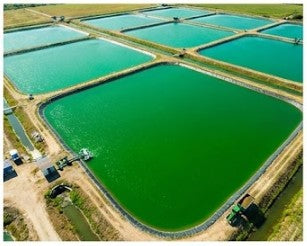
SUB-6 converts sludge-bound nutrients into phytoplankton fuel — the base of the food chain in aquaculture ponds. Healthy greenwater means natural live feed, improved water quality, and reduced feed costs.

Greenwater aquaculture pond — phytoplankton bloom powered by SUB-6 nutrient cycling

Built for Aquaponics

Phytoplankton are plants. The same Bacillus strains that digest sludge and fuel greenwater blooms in aquaculture ponds do exactly the same thing in grow beds, media and plumbing. SUB-6 digests fish solids in situ, mobilises locked-up phosphorus, iron, potassium and silicon, and delivers them as plant-available nutrition — no separate mineralising step needed.

Aquaponics system infographic — showing SUB-6 integration with fish, grow beds, and nutrient cycling

🌿 Grow Bed & Media Digestion

B. subtilis and B. licheniformis break down organic waste in grow beds and media before it clogs flow paths or goes anaerobic. Prevents the sludge accumulation that causes root rot and dead zones in media beds.

🔧 Pipes, Pumps & DWC

B. pumilus manages biofilm in plumbing, bell siphons and raft channels. Keeps flow paths clear without stripping beneficial surface biology. Less maintenance, fewer blockages, cleaner roots.

💎 Phosphorus & Iron Deficiency — Solved

B. amyloliquefaciens and B. megaterium solubilise locked-up phosphorus and iron from fish solids and sediment. These are the two most common deficiencies in aquaponics — and the two most expensive to supplement manually.

🔄 Fish Solids → Plant Fertiliser

Instead of siphoning fish waste out and dumping it, SUB-6 remineralises it in place. Settled solids become bioavailable N, P, K and Fe — the same nutrients your plants are missing. You stop throwing away fertiliser and start buying less of it.

⚡ In Situ Remineralisation

No separate aerated mineralising reactor. No offline sludge treatment step. SUB-6 digests and releases nutrients directly in the grow bed, media and plumbing while the system runs normally. One product, one dose, no extra hardware.

🧬 Nitrogen Mobilisation

Enhanced nitrification. SUB-6's Bacillus strains drive organic matter mineralisation and support the nitrogen cycle — moving N out of fish waste and locked-up sludge into plant-available form, rather than letting it accumulate as inert solids.

🛡️ Disease Mitigation — Internal & External

Bacillus biocontrol. The six strains competitively exclude and suppress fish and plant pathogens in the water column, on roots, and in the substrate. Enzyme production, competitive exclusion and quorum sensing disruption — confirmed in peer-reviewed aquaponic research.

♻️ The Closed Loop

Fish → waste → sludge digestion → mineral mobilisation → plant uptake → cleaner water → healthier fish. This is the exact closed-loop principle SUB-6 was built for — applied to the system where it matters most. The loop literally closes.

The Science Behind the Loop

The mechanism behind SUB-6's aquaponics performance is documented in peer-reviewed research — published in leading aquaculture, horticulture and plant science journals.

Scientia Horticulturae · 2016

Phosphorus Mobilisation in Aquaponics

Bacillus inoculation shifted phosphorus out of settled solids into plant-available solution — directly addressing the chronic P deficiency that limits aquaponic crop yields.

doi.org/10.1016/j.scienta.2016.02.029

Frontiers in Plant Science · 2021

Nutrient Remineralisation from Fish Solids

Lettuce grown on remineralised fish solids matched or beat commercial hydroponic nutrient solution for internal mineral content. Total suspended solids reduced by up to 87%.

doi.org/10.3389/fpls.2021.692463

Aquaculture International · 2024

Probiotic Integration in Aquaponics

Probiotics improve aquaponic performance through mineral nutrient solubilisation, organic matter mineralisation, nitrogen cycling, and biocontrol — the four pillars of the SUB-6 design.

doi.org/10.1007/s10499-024-01440-0

Fishes (MDPI) · 2025

The Call for Bacillus-Based Aquaponic Probiotics

Current probiotics don't address the full system. The industry needs Bacillus-based preparations designed for whole-system aquaponic use — fish, plants and bacteria together.

doi.org/10.3390/fishes10070312

Aquaponics Dose Guide

SUB-6 specification: >135 billion CFU per gram. Dose rates below are calculated for common aquaponics system volumes.

Application Per 100 L Per 1,000 L CFU/ml
Standard Maintenance 0.025 g 0.25 g 25,000
Establishing / Active Growth 0.037 g 0.37 g 50,000
Heavy Load / Acute Solids 0.074 g 0.74 g 100,000

Dose rates calculated from SUB-6 specification of >135 billion CFU/g. 1 level scoop = 1 g. For systems under 100 L, pre-mix the dose in 5 L of system water and distribute evenly across the tank or grow bed. Turn off UV sterilisers and ozone for 24–48 hours after dosing.

🛡️ Food-Safe: SUB-6 uses only naturally occurring, non-pathogenic Bacillus species. Safe for fish, edible plant roots, and food crops. No withholding period required. Non-GMO.

Application Protocol

Recommended dosing concentrations for SUB-6 in aquaculture ponds and RAS. Product specification: >135 billion CFU per gram of powder.

Application Dose CFU/ml Frequency
Maintenance 40 g per megalitre (1,000,000 L) 5,000 CFU/ml Every 2–3 weeks
Heavy Load / Initial 80 g per megalitre (1,000,000 L) 10,000 CFU/ml Adjust based on sludge levels
Acute Sludge Event 120 g per megalitre (1,000,000 L) 15,000 CFU/ml Weekly until sludge reduced

Available in 250g with scoop. Total viable count: >135 billion CFU/g. CFU/ml concentrations calculated at 1,000,000 L reference volume. For smaller systems, scale proportionally. Always maintain active aeration during application.

Application Methods

SUB-6 is formulated as a free-flowing powder at >135 × 10⁹ CFU/g. Choose the application method that matches your system configuration and goals.

💧 Direct Water Application

Simply mix with water and broadcast. For ponds, tanks, and RAS. Mix the required dose in a bucket of system water for 5 minutes, then distribute evenly across the surface or into a high-flow area. Best applied in the morning when temperatures are rising.

🌊 Substrate Injection

Target the sediment layer directly. For ponds with heavy sludge accumulation, suspend the dose in water and inject it near the pond bottom using a pump or submersible. Maximises contact between Bacillus strains and settled organic matter.

🔄 Biofloc Systems

Integrate into floc management. Add SUB-6 directly to the biofloc zone. B. licheniformis and B. subtilis enhance floc formation and protein conversion. Monitor TSS and adjust dose based on floc settleability.

🌱 Nursery / Hatchery

Greenwater starter protocol. For larval rearing, apply SUB-6 48–72 hours before introducing phytoplankton. The nutrient release cycle takes 1–2 days to establish. Combine with OC-K nutrient fuel for accelerated bloom development.

🏡 Aquaponics Systems

Pre-mix in a bucket of tank water, then distribute. Add the dose to the sump, directly into the grow bed, or into a high-flow area of the fish tank. Start at the Standard Maintenance rate (0.025 g per 100 L) and increase to Active Growth if solids are accumulating. UV off for 24–48 h. See the aquaponics dosing table above for exact rates by system volume.

💡 Pro Tip: For best results, apply SUB-6 in combination with OC-K Microbe Nutrient Growth Fuel. OC-K provides the prebiotic growth medium specifically formulated for Bacillus strains, accelerating establishment and prolonging activity between doses.

Build a Complete Nutrient Cycling System

SUB-6 handles the substrate layer. These complementary products extend biological coverage throughout the full water column.

🔬

OC-K — Microbe Nutrient Growth Fuel

Fuel for Bacillus activity. OC-K is a specialised prebiotic growth medium formulated for Bacillus strains. Use alongside SUB-6 for faster sludge digestion, higher population persistence, and more effective nutrient release. View Product →

🛡️

Microplex — Water Column Probiotic

22-strain broad-spectrum defence. Microplex handles the water column — pathogen suppression, nitrification support, and water clarity. SUB-6 + Microplex = complete coverage from sediment to surface. View Product →

🌿

NCOMP — Nitrogen Cycling Consortium

Filter maturation specialist. NCOMP provides Nitrosomonas, Nitrobacter, and supporting autotrophic strains for rapid biofilter establishment. Ideal pairing with SUB-6 for new ponds and RAS startups. View Range →

Everything in the Package

SUB-6 is a complete substrate management system in a single container. Open, dose, and watch the nutrient cycle activate.

📦

6-Strain Bacillus Blend

>135 × 10⁹ CFU/g. A precisely formulated blend of Bacillus subtilis, B. licheniformis, B. amyloliquefaciens, B. megaterium, B. pumilus, and B. mucilaginosus — all in one easy-to-dose powder.

⚖️

250g with Measuring Scoop

Practical packaging. 250g container with integrated scoop. 1 level scoop = 1 g. One container provides 250 applications at standard dose.

📋

Dosing Guide Included

Full protocol documentation. Every order includes a comprehensive dosing guide covering aquaculture and aquaponics protocols — maintenance, heavy load, and acute sludge event rates — plus application tips for different system types.

Scale Up Your Nutrient Cycling

For commercial operations and high-density systems, these upgrade paths extend SUB-6's capabilities.

📈

Higher CFU Formulations

Concentrated options available. For RAS facilities, hatcheries, and high-bioload systems requiring intensive sludge management. Contact us for custom CFU levels tailored to your operation.

🎯

Custom Strain Blends

Precise targeting. Work with our microbial team to design a custom blend emphasising specific strains for your system's waste profile — whether high-protein, high-cellulose, or mineral-heavy sludge.

🔄

Bulk Supply & Scheduled Delivery

Commercial operations. Available in bulk quantities with scheduled deliveries for ongoing operations. Includes tailored dosing programs designed by our technical team.

💬 Need a Custom Approach?

Our technical team can design a tailored substrate management program for your specific operation — including custom blends, dosing schedules, and integration with existing biological management.

Get in Touch

Frequently Asked Questions

Q Can SUB-6 be used in aquaponics?
Yes — the biology is identical. The same Bacillus strains that digest fish solids and mobilise minerals in aquaculture ponds do exactly the same thing in aquaponic grow beds, media and plumbing. Peer-reviewed research has confirmed that Bacillus-based probiotics improve phosphorus availability, reduce suspended solids, and suppress pathogens in aquaponic systems. A 2025 paper in Fishes (MDPI) explicitly called for this type of product. SUB-6 now ships with a full aquaponics dosing protocol.
Q Is SUB-6 safe for edible plants and food crops?
Completely safe. All 6 strains are naturally occurring, non-pathogenic Bacillus species — the same genus found in commercial probiotics, fermented foods, and healthy soil. They are non-GMO and safe for food crops, ornamental plants, fish, shrimp and all aquaculture species. No withholding period is required.
Q Why is the aquaponics dose different from the aquaculture dose?
Smaller volume, different delivery. Aquaponic systems are compact recirculating loops with no soil buffer. The higher CFU/ml target ensures the Bacillus population establishes quickly enough to keep pace with continuous fish waste input. At standard maintenance dose, 0.25 g per 1,000 L delivers 25,000 CFU/ml — enough for ongoing solids management without overdosing. The aquaculture dose is lower per litre because pond volumes are orders of magnitude larger and the biological load is distributed differently.
Q What is the difference between SUB-6 and Microplex?
Different purpose. Microplex is a 22-strain broad-spectrum probiotic for pathogen defence, nitrification, and water clarity in the water column. SUB-6 is a 6-strain specialist focused on substrate digestion, sludge reduction, and mineral mobilisation for greenwater production. They are complementary — SUB-6 handles the pond bottom, Microplex handles the water column.
Q Can SUB-6 be used with Microplex and OC-K?
Yes, they are designed to work together. SUB-6 handles the substrate layer (pond bottom), Microplex handles the water column, and OC-K fuels both. Together they provide complete biological coverage from sediment to surface for optimal system health and productivity.
Q How does SUB-6 fuel greenwater production?
Mineral remineralisation. SUB-6's Bacillus strains digest organic waste and release locked-up N, P, K, and Si back into the water column. B. amyloliquefaciens solubilises phosphorus and iron. B. megaterium releases phosphate from phytate. B. mucilaginosus mobilises potassium and silicon from silicate minerals. These nutrients are the exact fuel phytoplankton needs for stable, sustained blooms — turning pollution into productivity.
Q Is SUB-6 safe for fish and shrimp?
Completely safe. All 6 strains are naturally occurring Bacillus species — non-pathogenic, non-GMO, and safe for all aquaculture species including larval stages. Bacillus species are already present in most aquatic environments; SUB-6 simply provides a concentrated, targeted dose of beneficial strains.
Q How long does it take to see results?
Sludge digestion begins within 48–72 hours. Initial nutrient release (N, P, K) is detectable within 3–5 days. Phytoplankton response follows within 5–10 days depending on light availability and temperature. Full system transformation typically occurs over 2–4 weeks of regular dosing. Faster results when combined with OC-K nutrient fuel.

Not Sure Which Product You Need?

Every system has different waste profiles. Our technical team can help you choose the right formulation, dosing protocol, and complementary products for your specific setup — from home aquaponics to commercial RAS facilities.

Trade & Wholesale

Bulk pricing available for commercial aquaculture operations, RAS facilities, hatcheries, aquaponic farms, and resellers. Volume discounts, custom CFU formulations, scheduled deliveries, and technical support programs available.

View full details
Your cart
Variant Variant total Quantity Price Variant total
50gm with scoop
50gm with scoop
$72.20/ea
$0.00
$72.20/ea $0.00
100gm with scoop
100gm with scoop
$113.05/ea
$0.00
$113.05/ea $0.00
250gm with scoopSUB-6-250GM
$225.15/ea
$0.00
$225.15/ea $0.00

View cart
0

Total items

$0.00

Product subtotal

Taxes included. Discounts and shipping calculated at checkout.
View cart